Category: librarianship

  • Not Sure Where to Go From Here…

    Not Sure Where to Go From Here…

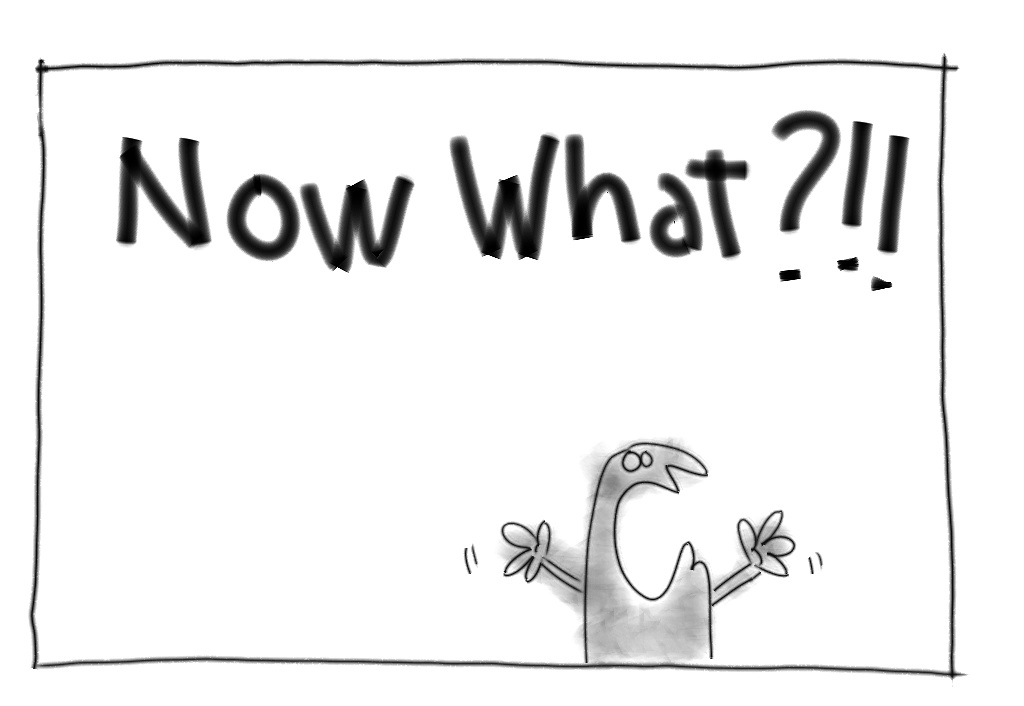
    On April 30, 2016, I graduated with my Ph.D. in Information Studies from the School of Information at Florida State University. What a confusing series of emotions I went through on that day – from anger, sadness, happiness, and dread. It has taken me several weeks to process what “graduating” REALLY means and what it means for me. After being a doctoral student for four years, a Master’s and Specialist student for four, and an undergrad for four, I’m not sure what a school-free life should be like. Should I have more time to do non-school related stuff? How do I do that without feeling guilty that I’m not working on schoolwork? Should I be working overtime to turn all my dissertation work into more publications, conference proposals, and posters? Unfortunately, I’m very tired right now. It’s challenging to find the motivation to do any work, if I’m honest. I don’t know if this is the norm or depression or what, but I’m feel drained thinking about my dissertation. The last thing I want to do is revisit it. At least right now.

    I doesn’t help that everything is in limbo as far as my job search is concerned. I have a few possible post-docs, nothing faculty tenure track, and nothing from the professional librarian world. In many ways, I still feel my Ph.D. does me a disservice in searching for librarian positions whether academic or public. Maybe I’ve super educated myself to the point where people assume I’m overqualified for so many jobs. I’ve written about this in a post for Letters to a Young Librarian awhile back. And I still have many of the same concerns. Will library directors assume when they look at my resume that I will demand more money because of my Ph.D.? ( Not the case.) Will they overlook me because they’re concerned I’ll become bored in the job and quit after a year or two? (Doubtful.) I’m still wondering over these questions. Still haven’t had heard much back from the academic and public library jobs I’ve applied to since defending my dissertation. The LIS faculty job market is so bleak right now (particularly in my area of research) that I’ve almost entirely given up on that path.

    The library job market is tight right now. At least that’s the impression I get. So much competition, and so many older librarians not retiring. Remember back in 2006 (when I was a very eager MLIS student) when all the librarians I knew kept saying that there would be lots of opening for new librarians coming soon? That there would be a wave of librarians retiring once I graduated. And then the recession hit and that didn’t turn out to be the case.

    I also keep asking myself would I be happy working back in the library. I think I would. I love research, but I have enough confidence in myself to know that I can find some way to incorporate research into my potential return to professional librarian life. I do very, very much miss working in the library, especially with teens. I’ve probably mentioned this a few times on this blog. Social media has played a hand in making me miss the library. Reading tweets, tumbles, and Facebook updates has made me more than a little jealous of those who are actually practicing in the library work. This work has its own share of issues, frustrations, and upsets, but I believe that I was contributing to something and really helping people.

    I’m also unsure what direction this blog should take. Now that I’ve slugging my way through a Ph.D., what should be the focus of my blog? Since I started it as a doctoral student, my posts have been about academia, research, presenting, and my struggles to overcome my insecurities as an academic. I think I would like to talk more about libraries, librarianship, and all the interesting and confusing aspects of our field. That would give me a whole bunch of stuff I could rant/talk about!

    Side note: I STILL don’t know what to say to people who ask me if they should go for a Ph.D. Or if it was all worth it. So far my response is, “Ummm.”Ask me again in a couple of years.


  • The Impact of Our Work on Ourselves

    The Impact of Our Work on Ourselves

    While interviewing rural librarians and young adults for my dissertation over last summer, I had the most surprising conversation with one high school librarian. We’ll call her Mary to maintain confidentiality. Our interview turned to the topic of how our work with patrons has an impact on us. Being from the South, Mary had been raised in a conservative, Southern Baptist church for the majority of her life. While in this church, she had been taught a harsh and judgmental perspective regarding sexuality, gender identity, and non-traditional lifestyles. When Mary began working teens in a high school library, she carried these views and assumptions with her. However, as she started engaging more and more with her young patrons, Mary saw her views begin to change in major ways.

    During the interview, Mary explained that she saw herself becoming more accepting and welcoming of those who lived and loved differently than she did. By interacting with her gay and transgendered high school patrons, she realized that the church that she had been a member of was flawed and destructive. Eventually, Mary broke away from this church and now sees herself as happier because of it. This turned into a very inspirational moment for me. Having also been raised in a Southern Baptist church, I knew exactly the type of mentality that exists in these churches and how challenging it can be, for some, to separate from church teachings. It is much easier to continue along in the highly critical and mentally harmful world in which you have been raised. Mary’s experience keeps coming back to my mind over and over again.

    The more I thought about this interview, the more I realized that this is not a conversation that I recall ever having during my MLIS or PhD program or even through my research. In LIS, we talk a lot about the impact we have (or may potentially have) on our patrons, particularly the impact children and teen librarians have on young patrons. Yet, we rarely discuss or consider the impact of this work on ourselves. The librarian I interviewed had been directly and personally impacted by working with her high school patrons. Out of all my interviews with librarians, only Mary mentioned being changed through her work with youth.

    After an admittedly cursory look at existing research about the impact of our work on ourselves, I have found little in the way of scholarly or even practitioner research. Most of what I found that somewhat relates are discussions about the impact on job satisfaction, workplace stress, and motivation. But I haven’t found anything about how our work as librarians impacts our personal lives. (Please prove me wrong! There must be something.) This is disappointing. Our everyday work with patrons, especially younger patrons, must and perhaps should have some sort of positive impact on our personal and professional lives. At the same time, I can think of several examples from my work in the library where interactions with patrons has not been the best and impacted my personal life in negative ways. Obviously, our work can have both a positive and negative impact of our personal and professional lives. Yet, why aren’t we talking and writing about this topic? More research is needed into the positive and negative impact of our work on ourselves. More conversation is needed. More questions are needed.

  • Guest Blogging for YALSA

    Guest Blogging for YALSA

    So long ago (January 13), I wrote a guest post for the YALSA blog about my experience at ALISE 2016 Annual Conference and its theme of Radical Change, inspired by Dr. Eliza Dresang and her work with youth services. You can check out what I wrote below or take a look at my original post on the YALSA blog.

    “Right before Midwinter, I attended the Association of Library and Information Science Education (ALISE) conference. This year’s the theme, Radical Change, was in honor of Dr. Eliza Dresang who passed away a little over a year ago. Along with being the Beverly Cleary Professor in Children and Young Service at the University of Washington’s Information School, Dr. Dresang also served as former faculty at Florida State University’s School of Information (my current home). Her work has had an impact on many youth services researchers (including myself) and serves as framework for evaluating youth literature, both online and offline.

    In 1999, Dr. Dresang published the innovative book Radical Change: Books for Youth in a Digital Age, a book that is still inspiring LIS researchers and librarians today. Radical Change refers to the way in which print books are changing in positive ways along with the evolving digital world. This book in not intended solely for academics, but also for librarians and teachers who learn how to spot and appreciate great books for children and young adults that move beyond the traditional print format.

    During the conference, I sat in on several youth services and non-youth services sessions that demonstrated how Radical Change is being incorporated into a range of research areas. To me, these presentations show how youth services are transforming to better meet the needs of young adults. It also shows how LIS faculty (at least some) are recognizing this transformation and incorporating it into their research and MLIS coursework. As always, the ALISE conference turned out to be an excellent lead into my experiences at Midwinter. Along with Radical Change, a supportive theme for the ALISE conference was transformation, inclusion, and innovation. These strongly reflect the theme of this year’s Midwinter, Transform Libraries. Together, these themes show how libraries are in constantly flux, changing and shifting to improve services to patrons and impact their communities.

    SLJ_cover_August2007_Dresang2-224x300As a YALSA board member, I saw the influence of Radical Change immediately as we participated in strategic planning to realign the plan with The Future of Library Services for and with Teens: A Call to Actionreport (2014). Much like in Dr. Dresang’s book Radical Change, this report recognizes the paradigm shift that is occurring in youth services. The shift is seen through technology, expanding literacies, connecting learning, and much more. I see a strong connection between Radical Change and YALSA’s Futures report. Clearly, YALSA is dedicated to assisting librarians in improving their work with teens all while keeping an eye on the future direction of teen services.

    If you have yet to read Radical Change or The Future of Library Services For and With Teens: A Call to Action report, I would encourage to take the time to do so. The Futures report is a thoughtful and intelligent presentation of the current direction teen services is heading while also demonstrating how librarians can be better prepared to meet these changes. While Radical Change has been out since 1999, it is still an influential book that has significantly inspired the work of LIS researchers, instructors and librarians are passionate about serving young adults.”

  • Top 5 YA and Libraries Research in 2015 (But Mostly from Pew Research Center)

    Top 5 YA and Libraries Research in 2015 (But Mostly from Pew Research Center)

    Recently, I did a guest blog post for YALSAblog – the official blog of Young Adult Library Services Association. Here what I said in the post, and here’s a link to the original post. Happy New Year!

    In the world of research about young adults and libraries, 2015 has been good year. This blog post will offer a recap of the Top 5 (in my opinion) young adult and library related research that you may have caught or may have overlooked throughout the year. Not surprisingly, several of these studies come from the Pew Research Center. If you aren’t familiar with Pew, it’s occasionally checking out the work that they do or signing up for daily or weekly research alerts (like research nerds, like me, do). According to Pew’s (2015) website, the research center is “a nonpartisan fact tank that informs the public about issues, attitudes and trends shaping America and the world. (¶1). ” They do some really terrific research on all sorts of topics but of interest to us is their work on young adults, the Internet, and libraries. Well, enough about Pew and more about these five studies that I would like to highlight from this past year. Included in my top five are a couple of leading researchers in young adults and libraries like Drs. Denise Agosto, June Abbas, and Marcia Mardis. Enjoy this research roundup!

    Agosto, D. E., & Abbas, J. (2015). “Don’t be dumb—that’s the rule I try to live by”: A closer look at older teens’ online privacy and safety attitudes. New Media & Society, 1–19. http://doi.org/10.1177/1461444815606121

    Dr. Denise Agosto is a faculty member and researcher in the School of Information at Drexel University who does amazing research on young adults and libraries. Another fun fact: she is the current editor for YALSA’s own Journal of Research on Libraries and Young Adults (JRLYA). Dr. June Abbas is a faculty member in the School of Library and Information Science at the University of Oklahoma who also does fantastic research on libraries, young adults, and technology. In this article, the authors discuss older teens feelings and concerns about online privacy. The research reveals that while young adults are concerned about privacy they also feel the need to offer personal information online to friends. For librarians, this article closes with implications for instructing teens about online security and privacy.

    Horrigan, J. B. (2015). Libraries at the crossroads (pp. 1–52). Pew Research Center. Retrieved from http://www.pewinternet.org/2015/09/15/libraries-at-the-crossroads/

    When this research came out, it made quite a splash in the library community. The research reveals that citizens see libraries as critical “community institutions” and are interested in the programming and services libraries provide, but indicated that library visits by Americans are slowly decreasing (p. 3). Included in this research were older young adults who expressed a desire for public libraries to support community education, improve the local economy through assist to local businesses, employers, and job hunters. They also wanted libraries to take a lead role in emerging technologies and help the community learn how to use these gadgets. Although this research wasn’t focused strictly of 12 to 18 year olds, it does highlight the needs and desires of older young adults and emerging adults regarding the library and its services.

    Lenhart, A. (2015). Teens, Social Media & Technology Overview 2015. Washington, D.C.: Pew Internet & American Life Project. Retrieved from http://www.pewinternet.org/2015/04/09/teens-social-media-technology-2015/

    Pew Research Center’s Amanda Lenhart often takes a lead role in reporting on young adults, technology, and social media. Not surprisingly, this report provides an overview of current young adult social media use. It is worth a scan of the summary of findings, which reveals that Facebook is still the most popular social media platform among teens, and 71% of young adults are using more than one social networking site on a regular basis. For librarians, this report may assist in better understanding current social media and online technology use by young adult patrons. It may answer (or at least help answer) lingering questions young adult or youth services librarians have about the technology habits of the population they serve.

    Lenhart, A., Smith, A., & Anderson, M. (2015). Teens, technology and romantic relationships (pp. 1–77). Pew Research Center.

    Another report headed by Amanda Lenhart may seem a bit out of the necessary reading requirement for librarians, but young adults are a complicated population who uses technology in a range of ways including romance. This report discusses how deeply entrenched the digital world is in the romantic life of a young adult. While this isn’t any different from the impact of social networking apps and sites on adult dating, the findings of Lenhart, Smith, & Anderson, (2015) does suggest several important distinctions between the two populations. Since, along with education and intellectual support, librarians support young adults’ social, emotional, and psychological well-being, this report is a important read for those curious about the internal lives of young adults.

    Mardis, M. A. (2015). R&E networks: Pathways to innovation for K-12. An NMC Horizon Project/Internet2 Strategic Brief (pp. 1–20). Austin, Texas: The New Media Consortium.

    Dr. Marcia Mardis is a faculty member and researcher in the School of Information at Florida State University who researches school libraries, K-12 education, and broadband. New Media Consortium (NMC) is “a community of hundreds of leading universities, colleges, museums, libraries, schools, and research centers.” (p. 1). I would encourage you to check out more of the library related research conducted by NMC. Although this report focused on a K-12 education audience, there are many takeaways for school and public librarians such as emerging technology trends, existing technology infrastructure, and the importance of broadband in schools. Through a gathering of K-12 experts, the connection of K-12 students to one another via high speed Internet is never more apparent. This report may be particularly interesting for school librarians and public librarians who collaborate with school librarians by illustrating the technological changes that are occurring and will occur in K-12 education.

    Hopefully, these brief synopses of young adult and library related research encourages you to investigate even more research. By doing do, we can improve the work we do with young adult patrons through the creation of research based practices. Perhaps I missed a study from this year that you thought should have been included. Please let me know! There is so much fantastic research out there concerning young adults, technology, libraries, social media, and more. It is incredibly easy to overlook a terrific study or two.