Category: writing

  • Falling In Love With an Article (And Other Strange Experiences)

    I feel as if this post is a bit of a nerd confession. I fell in love with a journal article during my spring semester of the doctoral program. In addition to the wonders of this article, I look forward to using  the diary-interview method in my research on young adults one day. Here is the citation for this glorious article:

    Zimmerman, D. (1977). The diary: “Diary-interview method.” Urban Life, 5(4), 479–489.

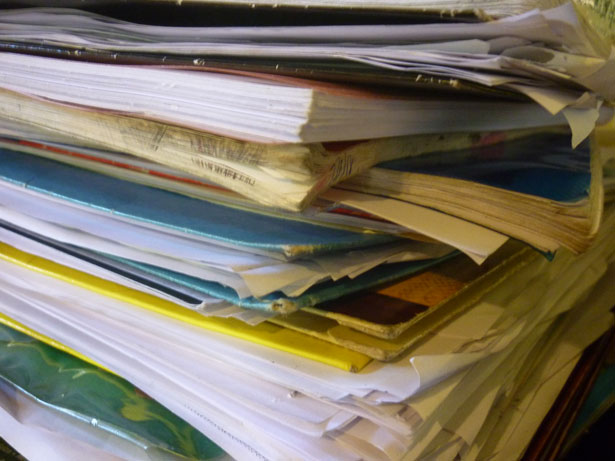
    The Zimmerman article for your reading pleasure

    Part of me loves Zimmerman’s writing because it reads (at least to me) slightly cheeky. I have a great appreciation for humor in scholarly work. It’s difficult to pull it off and I’m not entirely sure humor is “approved” of in academic writing.  After reading so many well-written but dense and dry during my first year , coming across a piece of writing that studies “the counter-culture” and asks the question, “why had a particular diarist not gotten stoned before going to a Chinese restaurant…” (1977, p. 492). Why not indeed.

    Along with this unusual (?) love, I’ve become drawn to a few theories . It has been an interesting experience to find myself fascinated by an area that only a year I found extremely intimidating. Savolainen’s Everyday Life Information Seeking, Dervin’s Sense-Making, and  Siemen’s Connectivism. Maybe lecturing undergrads on IB models inspired me more than it did anyone else….

    Other current social media and tech obsessions include infographics, 3D printers, MakerSpaces, and memes (of the cat variety in particular).

    In closing, I will leave you with my favorite quote from Zimmerman’s article.

    We should note that if the diaries we collected were to be constructed as exhaustive records of the diarists’ activities, we would have to conclude that this group was characterized by extraordinary bladder and bowel capabilities, since no instance of the elemental act of elimination was reported.” (Zimmerman, 1997, p. 487).

    Anyone else have a strange love or obsession? Am I all alone in my strangeness?

  • A Post In Which I Stress About My Disseration Unnecessarily

    Now that I’m in my second year of the doctoral program, I’ve been asked more and more about my dissertation topic. So far my reply has been somewhat vague and confusing (both to me and to the person). Usually I respond with words like ‘social media’, ‘young adults’, ‘informal learning’, and ‘libraries’. This doesn’t feel or sound like the correct response for a second year doctoral student. I have so many research ideas and curiosities that it is hard to wrap my mind around the idea of narrowing it down to just one focus. Then, I start to think, “should I have a complete and well honed dissertation title? Has everyone else in my cohort figured out exactly what direction they going with their dissertation? where should I go with this? what am I suppose to say!?!?”. If there is one thing I’m a professional at, it’s becoming pointlessly anxious about pretty much anything. It’s all too easy for me to compare where I am in my work with other doctoral students and stress out about how far behind I am (or seem to be). This is probably a common activity among doctoral students. I tell myself that anyway.

    Luckily, this week I met with my major professor, settling some of my anxieties and concerns.  I even have a few theories that I’m excited about researching more. I feel much more comfortable with the direction I’m heading, even though I still have some uncertainties and confusions. At least my dissertation topic is better than these. Although it’s definitely less interesting and not nearly as sexy. I imagine I will continue to adjust and modify my dissertation focus, at least a little bit. This is probably the norm. Right??? Now, hopefully, my response when people ask about my dissertation will be slight more intelligent and focused (at least sound like it is…). At this point, I still have a lot of thinking to do about my dissertation, so don’t ask me about it just yet! If you do, I imagine I will still look at you blankly (probably for just a few seconds anyway).

    For my fellow doctoral students: At what point in the program did you figure out your dissertation topic? How do/did you respond to people who ask/asked about your dissertation as you were figuring out where to go with it? What do you stress or feel anxious about as far as your dissertation goes?

    Hopefully not me. But I understand the feeling.
    Hopefully not me. But I understand the feeling.
  • Learning to Write Without Fear (For the Most Part….)

    Since I officially submitted my first manuscript for publication on last week, I feel the need to blog about writing and writing related activities. The knowledge that my poor, sweet little paper is awaiting review by anonymous researchers who may (or may not) tear my writing and research apart is terrifying. For me, the entire writing process is filled with a mixture of excitement, dread, and stress. The stress comes from the blank page on my screen, especially when writing that first paragraph. At that point, everything I writes sounds trite and unimpressive. Usually I push through, writing down whatever comes to mind and returning when I’ve written enough that the pressure to perform is slightly less intense. The dread comes from completing a research paper, article, or blog post and knowing that I have to come up with something else to research and write about. Even with something as simple and informal as a blog post I still feel a slight anxiety about what to write next. Additionally, I worry whether or not what I blog will be interesting to my audience. (Eh. Probably not? Maybe?)

    Asking others to proofread my work is a bit of a nail bitter as well. Sometimes it feels physically painful. It’s uncomfortable to give up the work that you stressed and slaved over to the criticisms of a friend, colleague, etc. But it’s a necessary evil. Hopefully, the criticisms are constructive and helpful. After a long period of nervousness about proofreading, I’ve reached the point where I’m asking my (very kind and giving) proofreaders to give my writing a serious ripping apart. It can only benefit me in the end. If they don’t do it, someone else will. (On a side note, getting undergrads to understand the concept and importance of proofreading may be impossible or at least really, really, really, hard and disappointing.)

    Generally what I look like while writing.
    Generally what I look like while writing.

    How did you learn to write without fear? How did you overcome the fear of knowing others will read your work? What does you writing process look like? What do you do that makes you comfortable while writing? Unless I’m the only person who has writing nerves, which is very possible.

  • Learning to Write for Academia and Myself

    I’ve been a student for a long time. Before I began this program last fall, I thought I had a solid understanding of what it means to write for an academic audience. But I had no idea of how much my writing would evolve over the past year. I’ve written a lot, read a lot of the literature, and received a significant amount of feedback about my writing from my colleagues. I imagine it was the sheer amount of writing I had to produce that helped improve my writing. Practice makes perfect (or at least reasonably good and possibly publishable). And also the comment on one paper, “I don’t think you know what you’re talking about.” No. No, I did not.

    Earlier this summer, my major professor and I talked a bit about our writing styles. Sometime during the past semester, I had a friend who after reading some of my papers told me that my writing was very direct. I wasn’t sure if this should be taken as a compliment or a critique. Luckily I have a major professor who is a clear and direct writer herself. She recommended a writing style called Writing Degree ZeroI did a bit of research and found that this style comes from a book of the same name by Roland Barthes. He published Le degré zéro de l’écriture (it sounds better in French doesn’t it?) in 1953. In this books of literary criticisms, Barthes suggests neutral, or writing degree zero, as the ideal style. It is a freer style of writing, a release from clichés, over blown language, and metaphors. Exactly what I like. He also throws around words like bourgeois, revolutionary, and Marxist (which you can never have too much of).

    I particularly liked this quote from the book. It’s very beautiful.

    “Literature is like phosphorus: it shines with its maximum brilliance and the moment when it attempts to die.”

    work