
A few nights ago I read an article where the author ended with a recommendation list for “girl-friendly” science fiction books. I understand seeking out books that may get boys/girls more interested in reading particularly reluctant readers. There is research that suggests that boys lag behind girls in reading comprehension. And I do realize that the covers selected by publishers and authors that aren’t particularly appealing to boys or girls. Most of us (me) do judge a book by its cover. And middle school and high school peers aren’t kind to boys would display excitement or even interest in reading. It’s not seen as a “masculine activity”. It’s uncool and nerdy. At least what I witnessed and friends’ experienced in K-12 schooling.
Tag: reading
-
The Mindful Presenter
For as long as I can remember, I’ve had an almost paralyzing fear of speaking in public. Despite the fact that I sung, acted, and improvised on stage while growing up, the idea of presenting my own thoughts and opinions to an audience terrified me. Then, once I became a librarian, that changed. Maybe because I played the role of a “librarian” to an audience instead of “Abby”, but whatever the reason, public speaking didn’t scare me. I loved doing television spots for the library, presenting in front of any age group, promoting the library during public events, and presenting one-on-one with patrons and staff. This confidence vanished when I left the library and became a doctoral student.
I don’t exactly know why, but I have some ideas. There is something incredibility personal about what you chose to research, especially once you reach the dissertation stage. At least this is the case for me. I’m passionate about what I research. My dissertation consumes most of my waking thoughts, so the idea of someone criticizing my research and calling me out fills me with fear. I also worry that the audience will “see thorough me” in some way and realize that I’m a fake, a terrible researcher, writer, and generally bad person. The Imposter Syndrome is strongly at play here. I’ve written about my struggles with it before. I know logically that these feelings and thoughts aren’t true. But emotionally I don’t. I definitely don’t. This is where mindfulness helps.
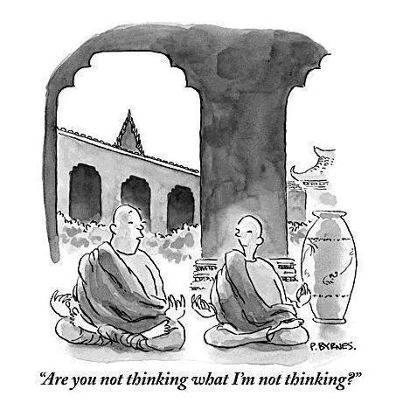
I’ve practiced mindfulness meditation for years following the suggestion of a childhood friend and now practicing therapist. (Well, attempting to practice for the most part. It’s hard.) But I never connected the usefulness of mindfulness to public speaking. Several months ago, one of my committee members recommended the book, Public Speaking for Psychologists: A Lighthearted Guide to Research Presentations, Job Talks, and Other Opportunities to Embarrass Yourself by Paul S. Silvia. Geared towards psychologists but helpful to anyone in the academic world, I love this book.
Along with many other helpful reflections, the author discusses the use of meditation for reducing public speaking anxiety. He offers up a body-scan approach for use before presentations. Occasionally in yoga, I’m lucky enough to have an instructor who will end the class with a guided body-scan meditation. It’s amazingly relaxing and particularly helpful for those (like me) who have trouble shutting off their mind. I never would have thought about using this type of meditation to combat public speaking anxiety, but it has helped me more than I can express. According to Jon Kabat-Zinn, apparently a fancy name in meditation,
When we practice the body scan, we are systematically and intentionally moving our attention thought the body, attending to the various sensations in the different regions. That we can attend to these body sensations at all is quite remarkable. That we can do it at will, either impulsively or in a more disciplined systematic way, is even more so. Without moving a muscle, we can put our mind anywhere in the body we choose and feel and be aware of whatever sensations are present in that moment.
Basically, you slowly scan your body step-by-step, beginning with your head and working down. You pay attention to areas that feel tense or uncomfortable and become aware of what you’re feeling where and why. This slow progression helps keep the mind focused on the meditation and not distracted by everything else in the world (my normal problem with meditation). Better descriptions and free video/audio guided meditations can be found all over the internet. Like here, here, and here. Body-scan meditation is also really helpful for insomnia (Been there too.).
I have a major presentation coming up on March 16. My prospectus defense! At least a week before, I’ll begin a daily body-scan meditation session. Then, the morning of my presentation I’ll have one more. I realize that for many people mediation can seem wishy-washy and completely useless. I’ve been that person. But for me, this helps. And that’s something.
Helpful reads!
- My current read: Dan Harmon of Nightline and Good Morning America fame recently published a book called 10% Happier: How I Tamed the Voice in my Head, Reduced Stress Without Losing My Edge, and Found Self-Help That Actually Works — A True Story. He had a severe panic attack in front of a national audience and now uses mindfulness to deal with stress. I’ve had one major panic attack in front of a much much smaller audience. Worst experience EVER, but I lived.
- The wonderful Sarabryce, a fellow librarian, recently wrote about her struggles with shyness and public speaking on her blog, Bryce Don’t Play.
- Thich Nhat Hanh is probably the most well-known voice on mindfulness. He’s written several books including The Miracle of Mindfulness. Such a wonderful read! I go back to his books again and again.