
Category: conferences

  • Learning about work-life balance

    Learning about work-life balance

    During April and May I had a mad rush of graduating, then turning right around and teaching a six weeks undergraduate course about social media management. But for the past two months I’ve been trying to do some self-care. In case you haven’t noticed from several other of my posts, the doctoral process is majorly intense. Especially that final year of dissertating. I didn’t have a solid approach to balancing my work life and my personal life. So, I’ve been adventuring into this idea of free time and self-care. This means I stepped away from my dissertation and other projects for awhile. I didn’t stress about immediately turning my finished dissertation into journal articles. I didn’t even stress much about job searching. I tried to move a bit away from the idea of myself as solely an academic. Instead, I thought of myself as someone who has the ability and freedom to relax and de-stress.

    So…what have I been doing? First, Blogging. I’ve been cheating on this blog with other blogs. Writing on a personal level through blogging has been a welcomed relief after so much academic writing over the past few years. I’ve been posting on the YALSA blog; and I co-authored a post on the Commons blog with Laura-Edythe Coleman, Ph.D. We discussed how empathy is shown (or not shown) within museums and libraries.

    I wrote a post for the YALSA blog about the YALSA’s learning agenda which is part of the division’s new strategic plan. Learn more about the agenda and the plan itself right here! Then, I wrote another post on the YALSA blog about networking, more specifically while attending ALA conferences. You can check it out here.

    Second, exploring all the wonderful beaches and cold springs of North Florida. Since moving to Florida, I’ve spent so little time wandering around Florida. It’s a (maybe surprisingly to some) beautiful state. So many parks, beaches, trails, and springs. Finally, I’ve been reading for fun. Without feeling guilty about it (at least no too much). I spent the entire doctoral program avoiding reading for fun. I always felt like I should be working instead. That’s a silly thought. Working 80 hour weeks will not be in my future if I can help it. There’s a lot more to life than work even though academia may tell you otherwise. By blogging, goofing, and reading, I’ve been able to momentarily find my own approach to work-life balance. I don’t know how long I’ll be able to keep it up, but in the meantime it’s keeping me happy and sane.

    In sudden and unexpected news, I’ve accepted a post-doctoral fellowship at Utah State University in the Instructional Technologies and Learning Sciences department. Over the next two years, I’ll learn a lot about the unfamiliar field of Learning Sciences. I’ll also be working on a fun and interesting IMLS grant focusing on small, rural school and public libraries and Makerspaces. In about a month I’ll be moving cross-country with a cat. This should be interesting and/or terrible.
  • Presenting Empathy at Annual

    Presenting Empathy at Annual

    I had a wonderful time presenting my Conversation Starter, “You Have My Empathy: What Does Empathy Look Like in the Library?” during Annual. I’m slowly becoming more confident at presenting. I spilt up my session into half overview in presentation form and half group work. I asked the audience these questions:

    • Should librarians be empathetic to patrons? Is this an additional role for us? Is it already a part of what we do?
    • What does empathy look like in the library? Some examples please! What are some of your concerns in being an empathetic librarian?
    • Describe a situation that might provoke a librarian’s empathy that could occur in a library. How would you respond? Is there a right and wrong way to respond?
    • Can empathy be taught? Could library staff be trained to be empathetic? Or are empathetic people naturally drawn to the profession? How are we taught to be empathetic in LIS? How could that teaching be improved?

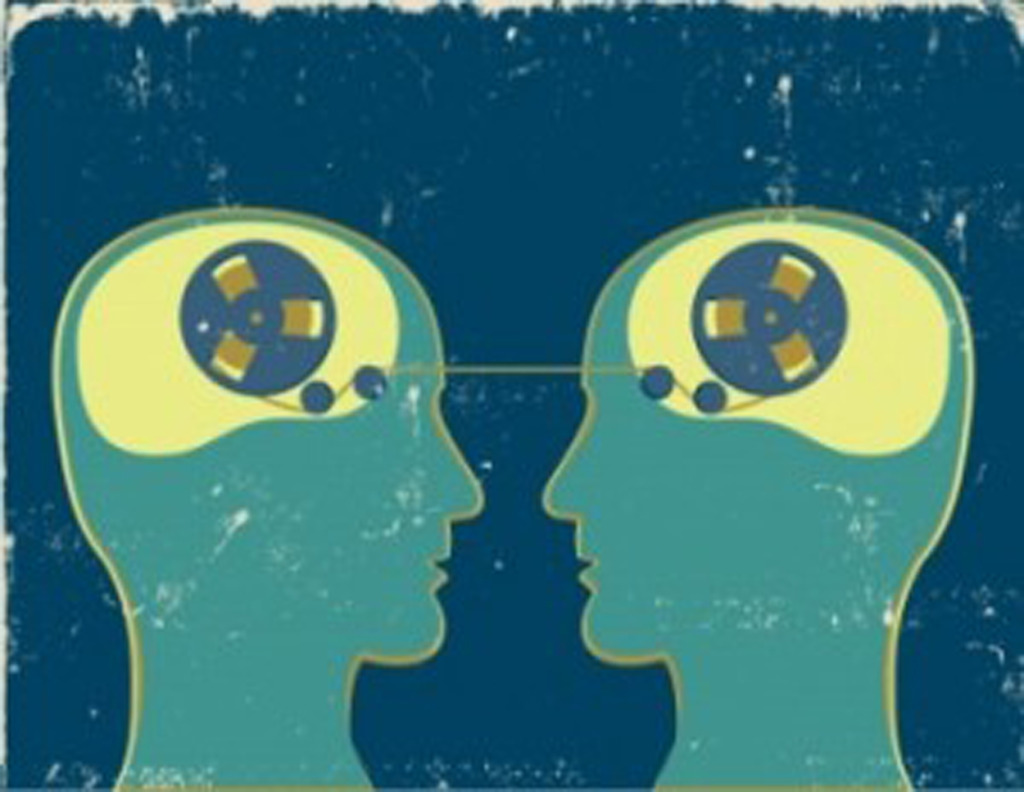
    In a sneaky way, the audience served as my informal focus group. Through our discussion, I wanted to get some insider knowledge about what role librarians believe empathy plays in the work we do. The Starter format worked well at getting us all thinking and talking about the “invisible” service of empathy. I’m planning to submit a program proposal for the next Annual and expand on this topic. Maybe even answer some of the questions I asked, especially regarding empathy training for library staff.

    For me, this presentation helped reinforce my passion for researching empathy within the context of libraries. So often the dissertating process is a lonely experience. Sure you have a committee and advisors, but the dissertation work is all you. ALL ON YOU. No one knows the particular area you’re researching better or feels as intensely about your dissertation as you do. While dissertating, I’m sometimes overwhelmed by feelings of insecurity and doubt. But the wonderful feedback I received from the audience gave me a much needed boost!

    If you missed my presentation or missed Annual entirely (poor kid!), don’t worry! Below you will find my slides, presentation notes, and a handout for recommended readings about this topic. One day I will figure out how to embed PDFs and other docs in my posts so they looks lovely and techy. But not today. Technology defeats me again! Please let me know if you have any questions, comments, or just want to say “hello!”. You can always e-mail me at alp07@my.fsu.edu or tweet at me (@abigailleigh).

    Empathy in the Library powerpoint
    Empathy in the Library notes
    Recommended Readings handout

    What do you all think of my questions? Do you have a thought or two you would like to share? Am I leaving anything out?

  • I’m up to stuff at ALA Annual (a.k.a Researching #alaac14)

    On Thursday, I’ll be among the thousands of librarians attending ALA Annual in Vegas! This is my second appearance at Annual and first in Vegas. Last year I won one of ALA’s Student-to-Staff program grants to attend Annual in Chicago. I’m not sure how well known this program is among students, but there are a surprising number of grants to go to all sorts of conferences for free or low cost. I would recommend MLIS, even PhD, students to apply to this program next year. It’s a great way to go behind the scenes at Annual and it looks look on a resumé/CV. My work placement was in the Networking Uncommons, helping with spontaneous programs and dealing with tech issues. Which is incredibly amusing if you know my level of tech skills.

    But this time I will be at Annual mainly as a researcher. As part of a larger study, I’m interviewing librarians about how they use social media to engage with young adult patrons. I’m surprisingly nervous about conducting research interviews for the first-time. Maybe because I’m expecting to find most of my interviewees while at sessions and roaming the convention center. Approaching complete strangers is not one of my strengths. This will be especially difficult at a busy and chaotic conference like Annual. But a conference like this is a too-good-to-miss opportunity to chat with librarians. Learn a bit more about what I’m investigate here.

    Some of the sessions I’m planning to attend: Annual Unconference, Data Driven Decision Making (LRRT), YA Author Coffee Klatch, Teaching Teens How to Fail, the Future of Library Services for and with Teens, Creativity and Innovation (LRRT), Deciding What’s Next for YALSA, Teen Space 201, LRRT Committee Meeting.

    Please say hello to me! I’ll probably try to interview you…Fair warning.

    If you are interested in being interviewed by me (and who wouldn’t??), please e-mail me at alp07@my.fsu.edu. These interview will be short and very informal (I promise!). Think of participating as one small step towards bridging the theory-practice divide. (Yes?)


  • Talking About My Research With Non-Researchers aka How I Bore Friends, Family, and Random Strangers

    How do you talk about your research with non-researchers? After spending some time earlier last week talking with other LIS researchers about my work and then spending time talking with non-researchers, this question popped up in my mind (not for the first time). I’d rather not have my work, something I feel quite excited about and proud of, to sound terribly boring and pointless.

    When someone asks what I do, I respond that I’m a doctoral student. I’ve learned not to say ‘doctoral student in information studies’ because that generally gets confused or weird looks. This is completely understandable. Information studies is a pretty vague and odd sounding area to study. Library-ish studies or library related stuff, while not completely accurate, is close enough and often how I describe my field. Then, the next question is, “what are your research interests?” or “what are you researching now?”.  Most of the time I say some combination of social media, young adults, and libraries. But sometimes I feels as if the questioner wants a more thought out response. And there is the unexpected moments when I am so excited about what I’m working on that I feel the need to gush.So, how much is too much? How much is boring? How much can I get away with? But mostly, what does this person really want to know? (If anything.)

    I’ve come up with a few guidelines for myself in response to these questions. I’m not sure if they make sense to anyone else, but here goes:

    1. Avoid talking about theories/theoretical frameworks/models/paradigms/etc. – Not to suggest that whoever I’m speaking with can’t understand these theories, but who outside of my committee, colleagues, and advisors could possibly be interested in hearing about my particular theory or model? I’m guessing nobody…
    2. Avoid using the word “context” – This word just sounds pretentious and snotty.
    3. Try not to sound like you’re regurgitating a journal article – This probably applies when you’re engaging with researchers too. Journal articles aren’t the most exciting of reading, even if you’re interested in the topic.
    4. If you have another doc student in the group, avoid talking about committees, IBR, the peer-review process, your advisors, colloquiums, etc. –  In any conversation, it’s important that those you are talking with have some working knowledge of whatever is being discussed. These words have little meaning outside of the ivory tower, so why bring them up. It’s just rude. I made this mistake during a conference last week. Silly Abby.
    5. Try to find the fun and interesting parts of whatever you are researching and highlight those – If you are interested in it there must be something that others will find amusing, thoughtful, surprising, vaguely curious, or at the very least not boring. Maybe this could be thought of as the sales pitch for your research.
    6. Ask what he/she/they think about your research – Maybe they know something you don’t. Maybe they have some insightful feedback, first impressions, or confusions. It’s fun to get a fresh perspective from someone outside of your world on what you’re passionate about.

    Has anyone else thought about this? How do you talk to “normal” people about research or academia? Any other suggestions? Something to add to my personal checklist? Mistakes I’ve made?

    6a00d83452194e69e2017ee81ffd85970d