Category: libraries

  • Guest Blogging: “Transforming Teen Services: Getting Teens Passionate About Civics (It can happen!)”

    Guest Blogging: “Transforming Teen Services: Getting Teens Passionate About Civics (It can happen!)”

    My monthly YALSA blog post is up! This time about it’s about something that is particularly relevant to what’s going on in the world around us. Check it out on the YALSA blog or read it below! Don’t worry. I’m still blogging here and not just guest blogging everywhere else. Another blog post tomorrow!

    As democratic strongholds, libraries are open to all, serving as a space for community engagement, open discussion, and intellectual development. Not only does the library space serve as a civic forum and information hub, libraries are community conversation initiators and civic guides (Gutsche, 2012; Kranich, 2012). Often when discussing civic engagement, the focus is on adult participation. However, teens should be brought into the discussion as young citizens with powerful voices that can effect change on local, state, and national levels. Libraries provide teens with “genuine and meaningful opportunities to work with each other and with policymakers to impact issues of importance” (Center for the Study of Social Policy, 2011, pg. 2). Civic engagement is tied to healthy youth development, introducing opportunities for teens to become comfortable expressing themselves, learn to think critically, and hone empathy and compassion skills.

    Screen-Shot-2015-05-12-at-4.12.44-PM.png

    Teens must develop the skills necessary to fully participate as engaged and informed citizens. Librarians can, and frequently do, help by providing youth programming that supports the development of 21st century skills. YALSA’s report, The Future of Library Services for and with Teens: A Call to Action, highlights the essential literacies that youth need to acquire to be work, college, and life ready. Through knowledge and skill accumulation, teens are more confident entering a world where sometimes opportunities for personal and professional development are few and far between. Additionally, within the safe space of a library, teens feel liberated to share their opinions, thoughts, and concerns with willing, involved, and engaged peers and adults. Growing up in a small rural town in Georgia, my library became one of the few places where I could learn about cultures, belief systems, and opinions that were far removed from my tiny hometown. These experiences have had a deep impact on how I serve my local community, country, and profession.

    While often not spotlighted as civic-minded programming, school and public libraries are already motivating youth to become civically active in the world around them. A look at YALSA’ Teen Programming Guidelines touches on the library’s role in aiding teens’ development of leadership and mentorship skills, partially through teen-lead programming. Whether these programs are book clubs, Teen Advisory Boards, or technology workshops, they give teens the room to feel a sense of ownership and self-confidence. Forming a TAB is an excellent way to encourage youth to learn more about and take part in civic activities. Teens build mentorship skills, collaborate with peers, find their voice, and learn about community outreach. Also, Board involvement (in a small way) introduces youth to the dynamics of governance. Many libraries have volunteer programs within the library that introduce youth to library community service as a worthwhile and positive expression of civic participation. Not only does the library serve as a civic space, it acts as an incubator to support and grow teen confidence, determination, and kindness.

    Getting teens (and adults) more engaged in civic activities is part of the library’s role as a community hub, informal learning space, and “conversation catalyst” (Kranich, 2012, pg. 81). Right now, librarians can demonstrate how to advocate and campaign for important causes. The current political situation offers many ways library-supportive teens can become civically involved on a local, state, national level, including supporting libraries during YALSA’s District Days, in the fight for IMLS funding, and on National Library Legislative Day. There’s so much we can do and so much teens can do to support each other.

    References

    Braun, L., Hartman, M. L., Hughes-Hassell, S., Kumasi, K., & Yoke, B. (2014). The Future of Library Services for and with Teens: A Call to Action. Chicago, IL: Young Adults Library Services Association. Retrieved from http://www.ala.org/yaforum/sites/ala.org.yaforum/files/content/YALSA_nationalforum_final.pdf

    Center for the Study of Social Policy. (2011). Results-based public policy strategies: Promoting youth civic engagement. Retrieved from http://www.cssp.org/policy/papers/Promoting-Youth-Civic-Engagement.pdf

    Gutche, B. (2012, August 31). The engaged and embedded library: Moving from action to talk. WebJunction. Retrieved from http://www.webjunction.org/news/webjunction/Engaged_Embedded_Library.html.

    Kranich, N. (2012). Libraries and civic engagement. Retrieved from https://rucore.libraries.rutgers.edu/rutgers-lib/37218/

    Young Adult Library Services Association. (2015). Teen Programming Guidelines (pp. 1–18). Chicago, IL: American Library Association. Retrieved from http://www.ala.org/yalsa/sites/ala.org.yalsa/files/content/TeenProgramingGuidelines_2015_FINAL.pdf.

  • Guest Blogging: “Transforming Teen Services: The Empathetic Librarian”

    Guest Blogging: “Transforming Teen Services: The Empathetic Librarian”

    On Monday, March 24, my post for the YALSA blog appeared.  It’s my first blog post in a monthly series of posts on Transforming Teen Services. You can read the post on the YALSA blog here. Or you can read it below! Please share your thoughts. I would love to hear from you all!

    While libraries have long participated in the struggle for social justice and equality, it hasn’t been until recent months thatour efforts have reached the attention of the public. We’ve pushed diversity and inclusiveness to the forefront with movements like Libraries 4 Black Lives and Libraries Are For Everyone. Libraries and librarians have also begun to incorporate social services alongside more traditional library services. We’re connecting patrons with mental health agencies, public health workers, and housing assistance. Libraries including San Francisco Public Library and Denver Public Library are offering themselves up as safe havens for the homeless; places where these patrons can find support and compassion.

    Although the majority of these programs are directed towards adults, many libraries are reaching out to teens. School librarians are collecting materials specifically for LGBTQ youth while public librarians are providing outreach to homeless teens. The YALSA Futures Report explicit calls out for libraries to serve underserved youth including those incarcerated, homeless, or otherwise in crisis. At the root of these services is empathy. By empathy, we mean the “ability to understand and share the feelings of another” (Oxford Dictionaries, 2017). It requires that librarians look beyond collection development, teen programming, and readers’ advisory as tasks to carry out. Instead, we need to carefully assess how we explicitly (but sometimes not) provide help and support to teens through this work. Empathy is inherently a part of the work we do every day. Libraries serve as community hubs and safe spaces, stepping beyond the traditional perception of libraries as warehouses for books. As community anchors, libraries advocate for teens through political engagement and outreach. Advocacy itself is an empathetic activity, nurtured by understanding and compassion. By promoting services and advocating for underserved youth, we demonstrate our commitment to and empathy for teen patrons along with promoting the well-being of our community as a whole.

    However, our empathetic work with youth is often overlooked or ignored. In the research and professional literature, empathy in libraries is frequently referred to as customer service. Yet this work is much more than that providing a teen patron with a library service. Being empathetic requires us to be active and engaged listeners who have a mindset of helping. This is already a core component of librarianship. Librarians impact the lives of youth by offering the library as a welcoming space for teen emotional, social, and psychological development. By being empathetic, we reach out to youth who may not have anyone else or feel misunderstood by peers, parents, or teachers. Through our engagement with teens, we display compassion and understanding that improves that quality of all library services.

    Libraries serve as a critical “third place” for youth, particularly underserved youth. Separate from home and school, libraries act as a judgement free space where teens can express themselves, hang out, and find support. Whether through teen mentorship, interest-driven education, or teen library space design, librarians place great value on teens and serving teens. A transformation of teen services and the ways in which a library can support teens is in progress. By incorporating empathy into library work with teens, librarians illustrate the continued importance of libraries in communities.

    You can find great resources about serving diverse and underserved teens at this YALSA wiki.

    Abigail Phillips, Ph.D. is a Postdoctoral Fellow in the Department of Instructional Technology and Learning Sciences at Utah State University. You can find her on Twitter (@abigailleigh) and by e-mail (abigail.phillips@usu.edu).

  • The Impact of Our Work on Ourselves

    The Impact of Our Work on Ourselves

    While interviewing rural librarians and young adults for my dissertation over last summer, I had the most surprising conversation with one high school librarian. We’ll call her Mary to maintain confidentiality. Our interview turned to the topic of how our work with patrons has an impact on us. Being from the South, Mary had been raised in a conservative, Southern Baptist church for the majority of her life. While in this church, she had been taught a harsh and judgmental perspective regarding sexuality, gender identity, and non-traditional lifestyles. When Mary began working teens in a high school library, she carried these views and assumptions with her. However, as she started engaging more and more with her young patrons, Mary saw her views begin to change in major ways.

    During the interview, Mary explained that she saw herself becoming more accepting and welcoming of those who lived and loved differently than she did. By interacting with her gay and transgendered high school patrons, she realized that the church that she had been a member of was flawed and destructive. Eventually, Mary broke away from this church and now sees herself as happier because of it. This turned into a very inspirational moment for me. Having also been raised in a Southern Baptist church, I knew exactly the type of mentality that exists in these churches and how challenging it can be, for some, to separate from church teachings. It is much easier to continue along in the highly critical and mentally harmful world in which you have been raised. Mary’s experience keeps coming back to my mind over and over again.

    The more I thought about this interview, the more I realized that this is not a conversation that I recall ever having during my MLIS or PhD program or even through my research. In LIS, we talk a lot about the impact we have (or may potentially have) on our patrons, particularly the impact children and teen librarians have on young patrons. Yet, we rarely discuss or consider the impact of this work on ourselves. The librarian I interviewed had been directly and personally impacted by working with her high school patrons. Out of all my interviews with librarians, only Mary mentioned being changed through her work with youth.

    After an admittedly cursory look at existing research about the impact of our work on ourselves, I have found little in the way of scholarly or even practitioner research. Most of what I found that somewhat relates are discussions about the impact on job satisfaction, workplace stress, and motivation. But I haven’t found anything about how our work as librarians impacts our personal lives. (Please prove me wrong! There must be something.) This is disappointing. Our everyday work with patrons, especially younger patrons, must and perhaps should have some sort of positive impact on our personal and professional lives. At the same time, I can think of several examples from my work in the library where interactions with patrons has not been the best and impacted my personal life in negative ways. Obviously, our work can have both a positive and negative impact of our personal and professional lives. Yet, why aren’t we talking and writing about this topic? More research is needed into the positive and negative impact of our work on ourselves. More conversation is needed. More questions are needed.

  • Guest Blogging for YALSA

    Guest Blogging for YALSA

    So long ago (January 13), I wrote a guest post for the YALSA blog about my experience at ALISE 2016 Annual Conference and its theme of Radical Change, inspired by Dr. Eliza Dresang and her work with youth services. You can check out what I wrote below or take a look at my original post on the YALSA blog.

    “Right before Midwinter, I attended the Association of Library and Information Science Education (ALISE) conference. This year’s the theme, Radical Change, was in honor of Dr. Eliza Dresang who passed away a little over a year ago. Along with being the Beverly Cleary Professor in Children and Young Service at the University of Washington’s Information School, Dr. Dresang also served as former faculty at Florida State University’s School of Information (my current home). Her work has had an impact on many youth services researchers (including myself) and serves as framework for evaluating youth literature, both online and offline.

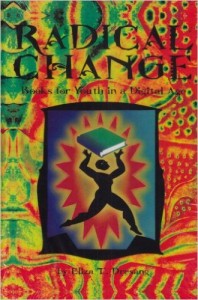
    In 1999, Dr. Dresang published the innovative book Radical Change: Books for Youth in a Digital Age, a book that is still inspiring LIS researchers and librarians today. Radical Change refers to the way in which print books are changing in positive ways along with the evolving digital world. This book in not intended solely for academics, but also for librarians and teachers who learn how to spot and appreciate great books for children and young adults that move beyond the traditional print format.

    During the conference, I sat in on several youth services and non-youth services sessions that demonstrated how Radical Change is being incorporated into a range of research areas. To me, these presentations show how youth services are transforming to better meet the needs of young adults. It also shows how LIS faculty (at least some) are recognizing this transformation and incorporating it into their research and MLIS coursework. As always, the ALISE conference turned out to be an excellent lead into my experiences at Midwinter. Along with Radical Change, a supportive theme for the ALISE conference was transformation, inclusion, and innovation. These strongly reflect the theme of this year’s Midwinter, Transform Libraries. Together, these themes show how libraries are in constantly flux, changing and shifting to improve services to patrons and impact their communities.

    SLJ_cover_August2007_Dresang2-224x300As a YALSA board member, I saw the influence of Radical Change immediately as we participated in strategic planning to realign the plan with The Future of Library Services for and with Teens: A Call to Actionreport (2014). Much like in Dr. Dresang’s book Radical Change, this report recognizes the paradigm shift that is occurring in youth services. The shift is seen through technology, expanding literacies, connecting learning, and much more. I see a strong connection between Radical Change and YALSA’s Futures report. Clearly, YALSA is dedicated to assisting librarians in improving their work with teens all while keeping an eye on the future direction of teen services.

    If you have yet to read Radical Change or The Future of Library Services For and With Teens: A Call to Action report, I would encourage to take the time to do so. The Futures report is a thoughtful and intelligent presentation of the current direction teen services is heading while also demonstrating how librarians can be better prepared to meet these changes. While Radical Change has been out since 1999, it is still an influential book that has significantly inspired the work of LIS researchers, instructors and librarians are passionate about serving young adults.”